Jan
Shining a Light on Double Happiness Marriage Vases
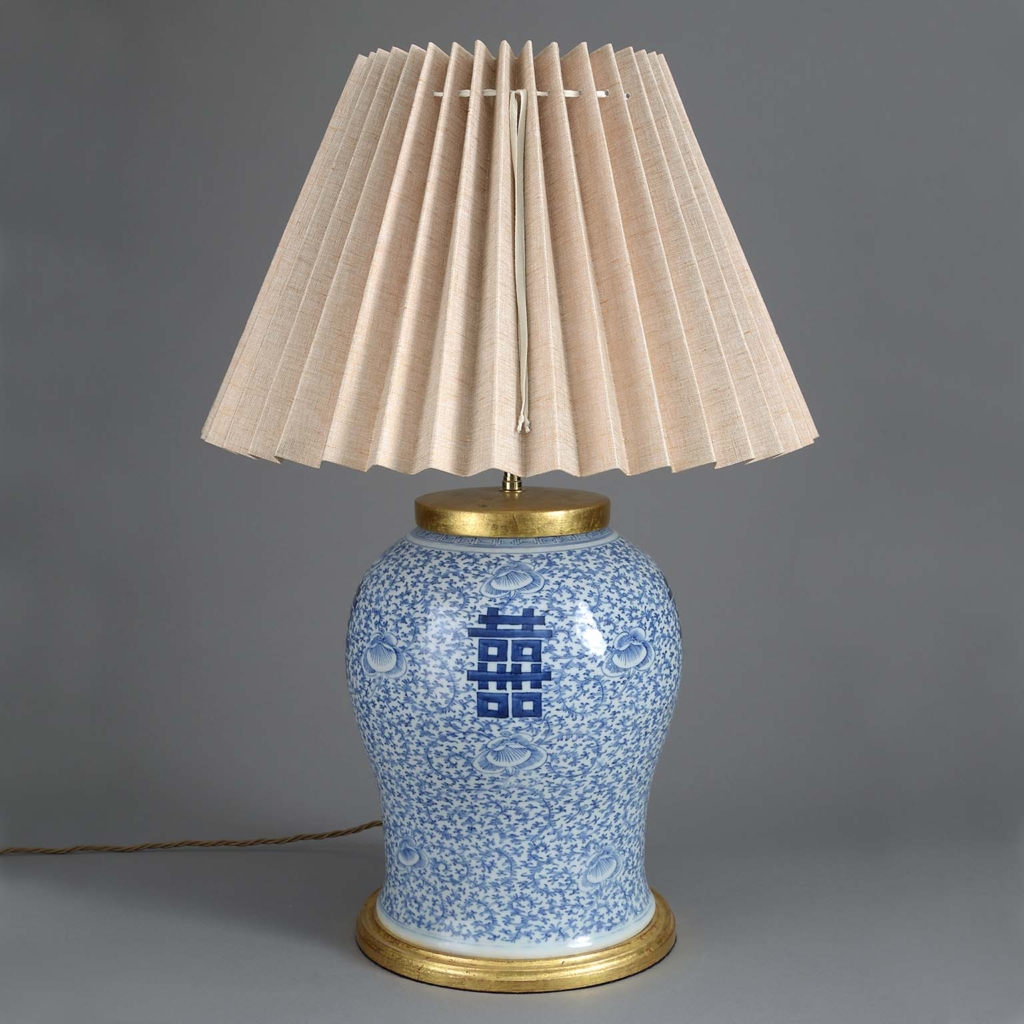
In this first edition of our Antique Lighting Series, we invite you to explore the significance and intricate beauty of Double Happiness Marriage Vases. Gaining significant popularity in the mid-nineteenth century, these vessels were traditionally gifted to newlyweds with wishes for eternal happiness and longevity.
The repetitive motif appearing on the surface of each vase is called shuangxi. It depicts a doubling of the character xi (喜, meaning joy) to express harmony, affection, and shared fortune for the couple. Records from the Tongzhi Emperor’s wedding reveal large-scale commissions of porcelain pieces decorated with the Double Happiness symbol, establishing their place in both court and popular culture. From the mid-nineteenth century, the shuangxi emblem became an established part of matrimonial custom.
Marriage vases are often decorated with elaborate and stylized floral motifs, as seen in the pieces exhibited at Timothy Langston Fine Art & Antiques. In Chinese decorative language, the orchid signifies love, fertility, and elegance. Confucius linked the orchid to an honorable person, also representing nobility and integrity. The repeated occurrence of the Double Happiness character, as well as the addition of other floral motifs demonstrating longevity such as sweet-pea vines, makes the message for lasting joint love and harmony even clearer.
The Chinese porcelain vase became a fashionable medium for lighting in the early 20th century with the dawning of electricity. The grand houses of Britain, Europe, and America incorporated adapted oriental objects into functional light sources as an alternative to conventional oil lamps. Blue and white porcelain is the greatest representation of this, and Double Happiness vases with their character marks and soft foliate grounds lended themselves perfectly to this tradition.
We hope to bring more enlightening stories and discoveries into the everyday, while celebrating the unique stories of the objects at Timothy Langston’s cabinet of curiosities in Belgravia.