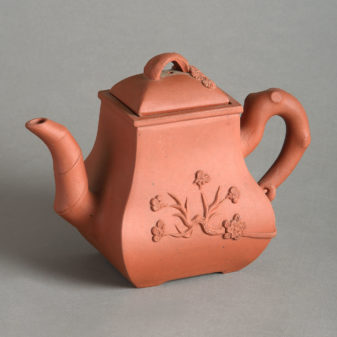
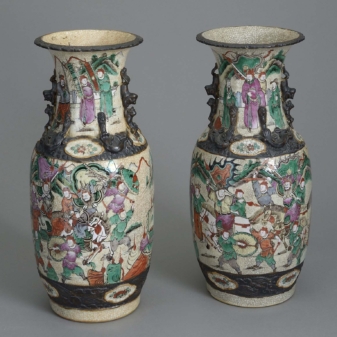
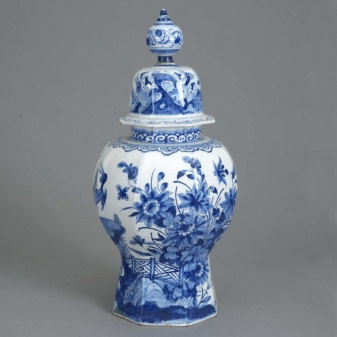
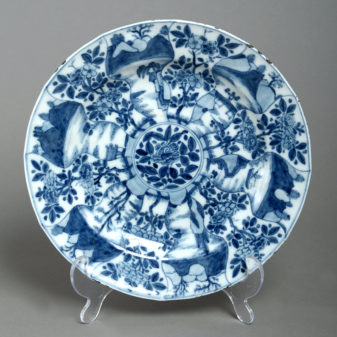
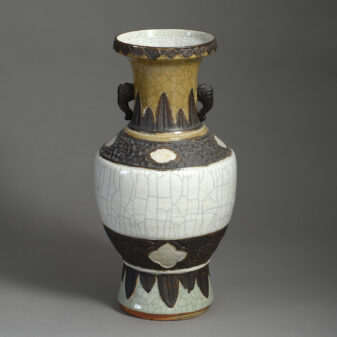
 19th Century Qing Dynasty Crackleware Porcelain Vase
 Subtotal: £1,950
Circa 1880 Netherlands


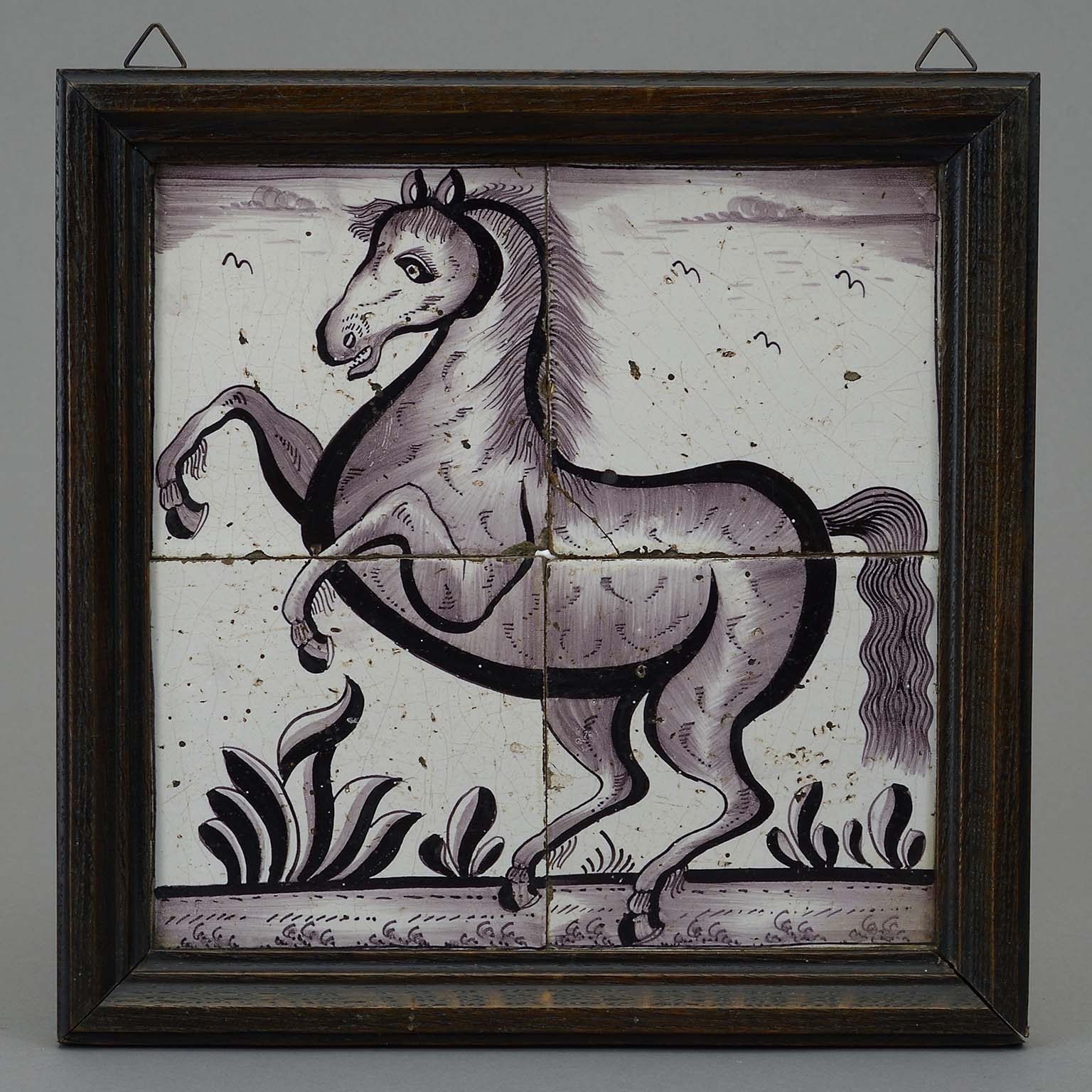
19th Century Delft Tile Picture
£1,650
SOLD
Height 12 inches (30.5 cm)
Width 12 inches (30.5 cm)
Depth 1 inch (2.5 cm)
A good nineteenth century Delft tile picture, depicting a rearing horse, in manganese glazes. Now framed.
Dimensions refer to outer framed size.
Nineteenth century Delft tile pictures are an important category within European ceramic production, rooted in the long standing tradition of tin-glazed earthenware known as Delftware. This tradition emerged in the sixteenth century, when Dutch potters adopted tin-glazing techniques derived from Italian maiolica as a response to the widespread importation of Chinese blue-and-white porcelain into European markets. By the early seventeenth century, Delft and other centres in the Netherlands had refined the manufacture of glazed ceramic tiles, typically decorated in cobalt blue on a white ground. They were widely used in interior design and decoration such as fireplace surrounds and wall panelling.
In the nineteenth century, Delft tiles were still seen as objects of both utility and as a sign of taste. Demand for such tiles increased, and production expanded beyond the Netherlands into Britain and other parts of Europe. Tiles from this period are often hand-painted with classic motifs including floral, animal, and figural subjects, frequently framed and displayed as pictures, rather than just incorporated as decorative installations in domestic interiors and public buildings. They illustrate the interplay between Dutch ceramic traditions and the broader European decorative arts of the Georgian and Victorian eras.
Today, nineteenth century Delft tile pictures hold both historical significance and continued relevance within the decorative arts market. They exemplify late Delftware production practices at a moment of transition, as artisanal ceramic traditions adapted to industrialisation and evolving aesthetic preferences. As artefacts, they provide insight into patterns of cultural exchange, technical continuity, and the persistence of skilled craftsmanship that continue to define the legacy of European ceramics.